Volume-1
Dr. Natchimuthu Karmegam
Dr. Mani Prakash
Table of contents
About this book
Keywords
Editors and Affiliations
About the editors
Bibliographic Information
Anil Kisan Bade 1-18
doi : https://doi.org/10.20546/978-93-94174-14-6_1
Senthilkumar Chinnaiyan, Prema Rathinam, Senthilkumar Chelladurai, Suresh Kanna, Abarna Shanmugam and Tamilmalar Gurumoorthy Pages 19-27
doi : https://doi.org/10.20546/978-93-94174-14-6_2
Senthilkumar Chinnaiyan, Prema Rathinam, Senthilkumar Chelladurai, Suresh Kanna, Nivetha Antonyraj, and Farjith Aswan Shaik Noor Deen Pages 28-36
doi : https://doi.org/10.20546/978-93-94174-14-6_3
Varnam Radhika and Ratna Kumari Pages 37-50
doi : https://doi.org/10.20546/978-93-94174-14-6_4
R. Sabarish 51-66
doi : https://doi.org/10.20546/978-93-94174-14-6_5
b. Packialakshmi, K.M.Sakthivel, Dr.R.R.Rasmi and I.Shama Anzum Pages 67-81
doi : https://doi.org/10.20546/978-93-94174-14-6_6
Dr.A.Dhinek Pages 82-89
doi : https://doi.org/10.20546/978-93-94174-14-6_7
R. Sabarish Pages 90-104
doi : https://doi.org/10.20546/978-93-94174-14-6_8
Prakash Chandra Gupta Pages 105-114
doi : https://doi.org/10.20546/978-93-94174-14-6_9
Gazala Nisar and Haika Farooq Pages 115-120
doi : https://doi.org/10.20546/978-93-94174-14-6_10
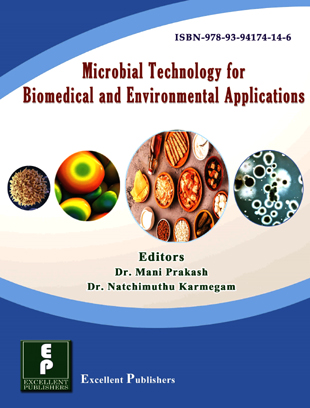
Microorganisms are among the most versatile and powerful biological systems on Earth, driving processes that sustain life, support ecosystems, and increasingly underpin modern technological innovations. Advances in microbial technology over the past few decades have transformed bacteria, yeasts, molds, and viruses from being viewed primarily as agents of disease into indispensable tools for biomedical, industrial, agricultural, and environmental applications. The edited volume Microbial Technology for Biomedical and Environmental Applications is conceived against this backdrop of rapid scientific progress and growing global demand for sustainable, cost-effective, and eco-friendly solutions.
This book aims to provide a comprehensive and integrated account of the beneficial and economical uses of microorganisms, highlighting their central role in addressing contemporary challenges in health, energy, and environmental management. It brings together contributions from researchers, academicians, and professionals who present both fundamental concepts and applied perspectives of microbial technology. By bridging basic microbiology with translational and industrial applications, the volume seeks to serve as a valuable reference for postgraduate students, doctoral researchers, educators, and practitioners in biotechnology, microbiology, biomedical sciences, and environmental engineering.
A major focus of the book is the exploitation of microbes in biomedical applications, including the production of antibiotics, vaccines, pigments, flavoring agents, and other therapeutically important metabolites. With rising concerns over antimicrobial resistance and emerging infectious diseases, microbial systems continue to be at the forefront of drug discovery, vaccine development, and medical technological microbiology. Chapters devoted to microbial metabolites, biopolymers, and probiotics emphasize their importance in improving human health, enhancing immune responses, and supporting the development of functional foods and advanced biomaterials.
Equally important is the role of microbial technology in industrial and environmental sustainability. The book covers diverse aspects of fermentation technology, including the use of different substrates, optimized growth conditions, and process parameters that influence product yield and quality. Special attention is given to lignocellulosic decomposition and the conversion of renewable biomass into value-added products such as bioethanol, organic acids, fuel chemicals, and biodegradable materials. These topics highlight the potential of microbes and microbial enzymes in reducing dependence on fossil fuels and promoting a circular bioeconomy.
Environmental applications form another central theme of this volume. Chapters on microbial remediation of pollutants, pollution mitigation through microbial agents, and waste valorization illustrate how naturally occurring and engineered microbes can detoxify hazardous compounds, treat industrial and municipal wastes, and recover useful resources from waste streams. The production of biofuels, biogas, and biodegradable products further demonstrates the capacity of microbial systems to contribute to cleaner energy production and sustainable waste management strategies. By presenting topics ranging from classical fermentation and metabolite production to cutting-edge applications in environmental biotechnology and medical microbiology, this edited book underscores the interdisciplinary nature of microbial technology. It also reflects the increasing convergence of microbiology with molecular biology, bioprocess engineering, systems biology, and environmental sciences.
We hope that Microbial Technology for Biomedical and Environmental Applications will inspire readers to appreciate the immense potential of microorganisms and encourage further research and innovation in this dynamic field. The editors express their sincere gratitude to all contributing authors for their scholarly efforts and to the reviewers for their constructive insights. It is our earnest belief that this volume will serve as a meaningful contribution to the scientific community and support the development of sustainable solutions for the benefit of society and the environment.